
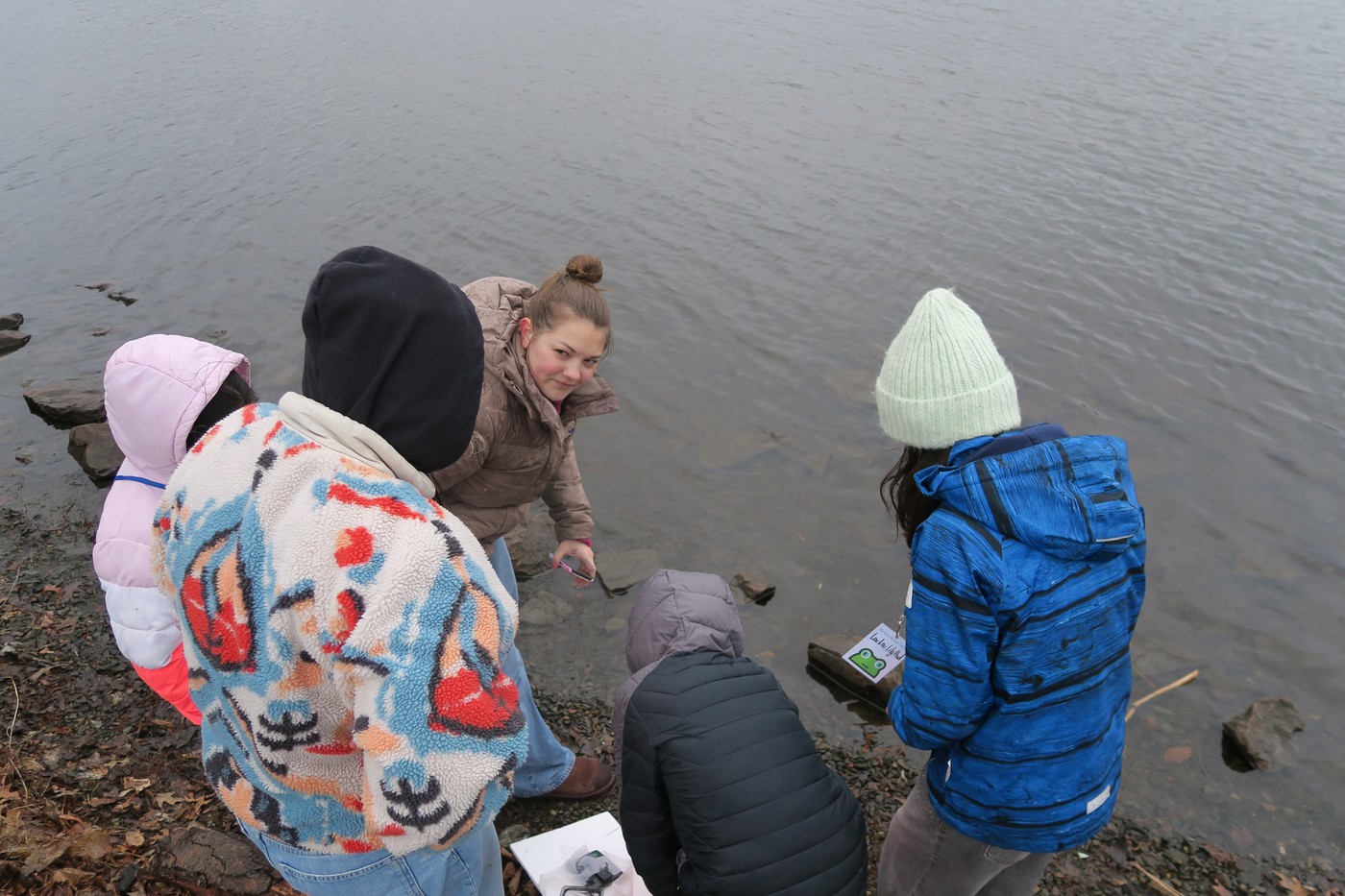
What began as an ambitious return to project-based learning at the Healey School has culminated in a memorable—and emotional—moment for fourth graders: the release of young trout into the Mystic River, marking the end of months of care, observation, and environmental study.
The project aims to reintroduce hands-on experiences across all grade levels following a slowdown during the pandemic years. The guiding question for students was simple but ambitious: How can we help the Mystic River thrive?
Over the course of the unit, students investigated real-world environmental challenges such as erosion, water pollution, stormwater runoff, and habitat loss. They then developed solutions and presented them to community stakeholders, including the City Council, the Massachusetts Water Resources Authority, and the Mystic River Watershed Association. Proposals included adopting storm drains, upcycling trash, planting native vegetation, and advocating for river cleanup infrastructure.
At the same time, students participated in the Trout in the Classroom program, raising approximately 200 native brook trout from eggs to fingerlings. In a carefully maintained classroom tank funded by the school’s PTA, students monitored water temperature, tested chemical levels, and cared for the fish multiple times each week, learning firsthand what it takes to sustain a living aquatic ecosystem.
When release day arrived, emotions ran high. Many students had formed strong attachments to the fish after months of care.
“Our fourth graders are so incredibly lucky to get to experience such authentic, hands-on experiences that connects directly to the world right outside their door! It makes their learning much more meaningful and memorable. This unit was full of thrilling moments like this that students will remember for a life time!”
Educators say that kind of emotional investment is exactly what makes project-based learning so powerful. Students not only learn science concepts—they experience them. Teachers report that students now notice environmental issues in their daily lives and connect classroom lessons to real-world systems in more meaningful ways.
“When we go on field trips they notice storm drains and point them out to us,” said instructor Marie Clevering. “During Literacy class, when we learned about the Boston Tea Party, one student exclaimed, ‘That would hurt the river!’”
The trout release marked both an ending and a beginning: the conclusion of a months-long scientific investigation, and a lasting lesson in environmental responsibility and stewardship. School leaders say the project will continue as a capstone experience for fourth graders in future years, supported by PTA funding and community partnerships.
For students, the experience was more than a science unit—it was a chance to see themselves as caretakers of their local environment, and to understand that even small actions can connect directly to the health of a living river system.